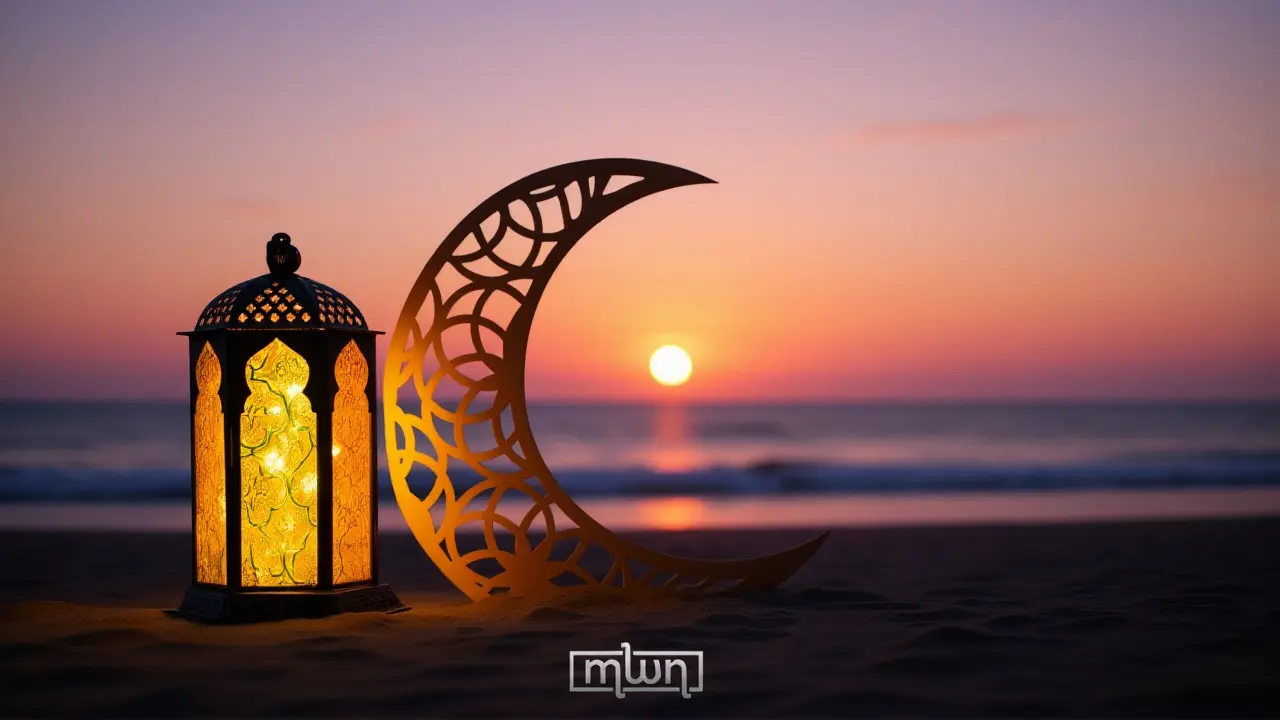
For millions of Muslims worldwide, the holy month of Ramadan is set to begin in late February 2026, but this year’s timing comes with a rare twist. The start of fasting coincides almost perfectly with Ash Wednesday and the Lunar New Year, creating a unique three-day spiritual window across different faiths.
While exact dates depend on moon sightings, major organizations predict Ramadan will start on the evening of Tuesday, February 17, or Wednesday, February 18, 2026. It is expected to conclude around March 18 or 19, marking the celebration of Eid al-Fitr.
The Countdown Begins
Here’s the thing about the Islamic calendar: it’s lunar, not solar. That means Ramadan shifts earlier by about 10 to 11 days each Gregorian year. In 2024, it started in March; in 2025, it began in late February; and now, in 2026, we’re looking at mid-February.
According to the Human Relief Foundation, the month is expected to kick off on the evening of Wednesday, February 18, 2026. They project it will end on the evening of Thursday, March 19, 2026. However, other groups like Muslim Aid and Islamic Relief suggest an earlier start on the evening of Tuesday, February 17. This slight discrepancy is normal—it all comes down to where you are and whether your local community can spot that sliver of a crescent moon.
Muslim Aid notes that the month lasts either 29 or 30 days, depending entirely on that sighting. So, while some might break their fast on March 18, others could be waiting until March 19. It’s a reminder that for many, tradition trumps calculation.
A Rare Spiritual Convergence
But wait—there’s something else going on in February 2026 that religious observers are buzzing about. A recent report highlights a "rare global alignment" of major spiritual events within a tight three-day window.
On February 17, the Lunar New Year begins for many East Asian communities. That same evening, if the moon is sighted, Ramadan starts for Muslims. Then, on February 18, Christians observe Ash Wednesday, marking the beginning of Lent. Turns out, having these three distinct observances overlap so closely is unusual. It creates what one source called an "extraordinary moment of spiritual significance" across faith traditions.
This isn’t just a calendar quirk; it’s a chance for interfaith reflection. Imagine neighborhoods where neighbors are breaking fasts, sharing dumplings, and attending mass services all within the same week. It’s a subtle but powerful convergence of human devotion.
Local Authorities Call the Shots
Who decides when Ramadan actually starts? It’s not a single global boss. Instead, local religious authorities make the call based on moon sightings. Take Uganda, for example. Abdul Hafiz Ssebumba, Director of Sharia in the Office of the Supreme Mufti, confirmed the sighting for his country. He announced that the crescent moon was seen on the evening of February 17, meaning fasting would commence the next day, Wednesday, February 18.
Ssebumba’s announcement underscores how decentralized the process is. While Saudi Arabia’s Umm al-Qura calendar provides a predictive timetable used widely for planning, actual observance often hinges on local verification. If the sky is cloudy in one city but clear in another, the dates can shift by a day. That’s why you’ll see slightly different dates from different charities and news outlets.
Key Nights and Practices
For those preparing for the month, one date stands out above the rest: Laylat al-Qadr, or the Night of Power. According to the Human Relief Foundation, this spiritually significant night is expected on the evening of March 16, 2026—the 27th night of Ramadan. Muslims believe this is the night the Quran was first revealed to Prophet Muhammad, making it a focal point for prayer and reflection.
Daily life during Ramadan changes significantly. Fasting (sawm) is obligatory from dawn to sunset for most adults. Exemptions apply for those who are ill, traveling, pregnant, breastfeeding, elderly, or menstruating. The pre-dawn meal is known as suhur, and the feast that breaks the fast at sunset is called iftar. Beyond abstaining from food and drink, many strive to avoid sinful behavior and focus on charity and community ties.
What Comes Next?
As February 2026 approaches, keep an eye on your local mosques and religious leaders. They will provide the final word on whether your community starts on the 17th or 18th. Meanwhile, the broader cultural impact of this rare alignment with Lent and Lunar New Year may spark new conversations about shared values across different belief systems.
The details are still being finalized by astronomical bodies and religious councils, but the framework is clear. Whether you’re observing, working, or simply curious, the coming weeks will offer a unique glimpse into how time, tradition, and faith intersect.
Frequently Asked Questions
When exactly does Ramadan 2026 start?
Ramadan 2026 is expected to begin on the evening of Tuesday, February 17, or Wednesday, February 18, 2026. The exact date depends on the sighting of the new crescent moon, which varies by location. Major organizations like Muslim Aid suggest the 17th, while Human Relief Foundation points to the 18th.
Why do different sources give different dates?
Dates vary because the Islamic calendar is lunar-based and relies on physical moon sightings rather than fixed astronomical calculations alone. Local religious authorities, such as the Office of the Supreme Mufti in Uganda, confirm sightings for their specific regions, leading to potential one-day differences between countries.
What is special about the timing of Ramadan 2026?
In 2026, Ramadan overlaps with two other major observances: the Lunar New Year (February 17) and Ash Wednesday (February 18). This rare three-day convergence creates a unique period of simultaneous spiritual significance for Muslims, Christians, and those celebrating the Lunar New Year.
When is Laylat al-Qadr in 2026?
Laylat al-Qadr, the Night of Power, is expected on the evening of March 16, 2026. This corresponds to the 27th night of Ramadan and is considered the holiest night of the year, believed to be when the Quran was first revealed.
How long will Ramadan last in 2026?
Ramadan typically lasts 29 or 30 days. For 2026, it is expected to end around March 18 or 19, with Eid al-Fitr celebrations following immediately after. The precise length depends on whether the moon is sighted on the 29th night of the month.

Oh, look at us! 🌟 We are all so enlightened by this "rare alignment" as if the cosmos has personally curated a spiritual buffet for our convenience. It is absolutely pathetic how people cling to these calendar coincidences to feel special. The universe doesn't care about your fasting or your dumplings; it’s just gravity and light doing its thing. But sure, let’s pretend this is some grand cosmic design rather than basic astronomical math that anyone with a high school education could calculate. 🙄
I think we should focus on the positive aspect of different communities coming together during this time. It is an opportunity for mutual respect and understanding among neighbors who may practice different faiths but share similar values of devotion and reflection.
It is truly disheartening to see how Western media attempts to sanitize and homogenize distinct cultural and religious observances into a single narrative of "spiritual convergence," which serves only to dilute the unique identity of each tradition and impose a superficial sense of unity that ignores the deep historical and theological differences that actually define these practices, thereby creating a false equivalence that does more harm than good in terms of genuine interfaith dialogue and respect for individual religious autonomy and heritage.
Sure, enjoy your "spiritual window." Meanwhile, the real powers that be are manipulating the lunar calendars to keep you distracted while they implement their global control agenda. The moon sightings? Rigged. The dates? Calculated by algorithms designed to sync your brainwaves. Wake up sheeple. 😒
The ethical implications of such temporal alignments are profound, yet rarely discussed with the seriousness they deserve. One must consider whether the commodification of sacred time through media sensationalism undermines the moral integrity of the observances themselves. It is a formal matter of concern that society treats these events as curiosities rather than solemn commitments to self-discipline and community welfare.
You guys are missing the bigger picture! The frequency of the moon cycles aligns with human bio-rhythms, and this overlap creates a massive energetic shift that most people are too asleep to notice. I’ve been tracking the astral projections during these windows, and it’s clear that the collective consciousness is being manipulated by elite frequencies. Stay woke!
This is such a beautiful reminder that we are all connected! Let’s use this time to spread love and kindness. Whether you’re breaking fast, eating dumplings, or attending mass, let’s celebrate our shared humanity. Go out there and make a difference! 💖
Oh great, another "rare" event. How original. I’m sure the news outlets will milk this for weeks. It’s not like the moon orbits the earth or anything. Just typical clickbait nonsense. 🙄
What strikes me is the potential for personal growth during this period. Fasting, prayer, and reflection are universal tools for inner transformation. Regardless of the specific faith, the act of stepping back from daily routines to focus on what truly matters is something everyone can benefit from. Let’s support each other in this journey.
OMG!!! This is SO exciting!!! 🎉🎊 I mean, who wouldn’t want to have three holy holidays at once??? It’s like a spiritual triple feature!!! I’m already planning my iftar menu and I’m thinking of adding some dumplings just for fun!!! Who else is hyped??? 🤩✨
While I appreciate the enthusiasm, it is important to maintain a respectful distance from traditions that are not one's own. However, acknowledging the significance of these events for others is a mark of good character. Let us observe with dignity and restraint.
As a cultural ambassador, I find this convergence fascinating. It highlights the intricate tapestry of human belief systems and how they intersect in time. It is a testament to the diversity of our world and the shared human experience of seeking meaning through ritual and celebration.
Keep it respectful. Don’t overstep.