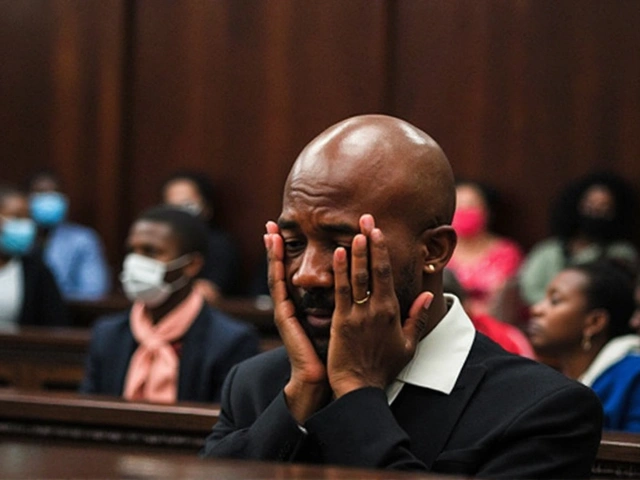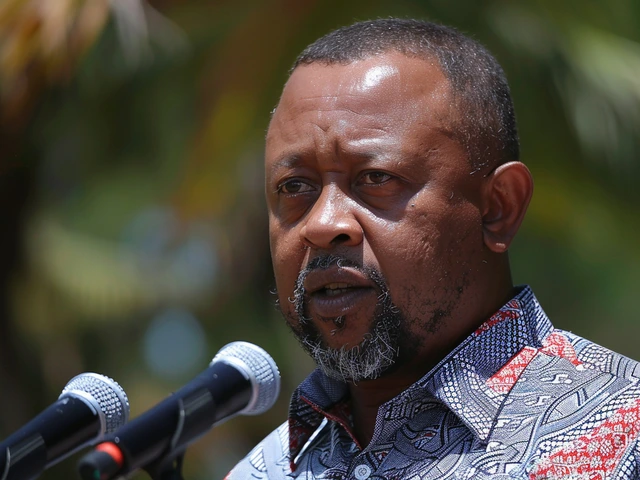
A female South African Police Service officer, police officer in South African Police Service is facing disciplinary action after a viral video surfaced showing her allegedly accepting a R2,000 bribe. The incident, which took place on the roadside in Diepsloot, Johannesburg, Gauteng, has reignited public fury over petty corruption.
The footage, recorded on Friday 6 June 2026, captures a tense confrontation where a civilian accuses at least four uniformed officers of demanding cash. In a twist that underscores the absurdity of the situation, the officer is seen returning the money as the motorist berates them for their actions. The video spread rapidly across Facebook and Instagram, with users tagging it with the infamous slang term “cold drink” — a euphemism for bribes that has become synonymous with police misconduct in South Africa.
The "Cold Drink" Culture Exposed
Here’s the thing: this isn’t just about one bad apple. It’s about a systemic issue that citizens have been navigating for years. The phrase “cold drink” or “cool drink” is widely understood code for a bribe. When an officer asks if you’d like to buy them a cold drink during a traffic stop, they aren’t thirsty. They’re asking for cash — usually a few hundred rand, though amounts can vary wildly.
In this specific case, the amount was R2,000 (approximately $110 USD). That’s not pocket change for most motorists. According to Dr Ronnie Gonasagaran Dayananda Rajin, academic at University of South Africa, terms like “tjo-tjo” or “make a plan for a cold drink” are embedded in the culture of some units within the service. He notes that these phrases refer to both petty and substantial cash exchanges, blurring the lines between minor infractions and serious extortion.
The Institute for Security Studies (ISS Africa) has long documented this phenomenon. Their research highlights how small bribes create big challenges for public integrity. It’s a slippery slope. Once you pay for a “cold drink,” you’re complicit in a system that erodes trust in law enforcement. And yet, many feel they have no choice but to comply to avoid harassment or fabricated charges.
SAPS Responds to Viral Outrage
Turns out, social media moves faster than bureaucracy. By Saturday 7 June 2026, South African Police Service management in Gauteng had acknowledged the video. An official statement confirmed they were investigating instances of apparent extortion and bribery. Within 48 hours, by Monday 8 June 2026, reports from Cape Argus indicated that disciplinary proceedings had been initiated against at least one officer featured in the clip.
The speed of the response suggests SAPS is under immense pressure. Public tolerance for such blatant corruption is wearing thin. Social media posts from civic groups like The Bill and AwakeMzansi condemned the act as a crime against the people of South Africa. One post noted the damage caused when citizens are forced to pay traffic cops, police, and even Home Affairs officials just to get basic services.
But does disciplinary action go far enough? Critics argue that internal probes often lack teeth. Without criminal prosecution, the deterrent effect is minimal. The National Prosecuting Authority (NPA) has previously handled similar cases, including an arrest in March 2025 linked to a R1,000 “cold drink” bribe taken inside court premises. That case showed that even sacred spaces like courts are not immune to this rot.

A History of Petty Corruption
This incident didn’t happen in a vacuum. Let’s look at the timeline. Back in June 2023, the Tshwane Metro Police Department (TMPD) announced a crackdown on “cold drink” money. They encouraged motorists to record videos when stopped, acknowledging that extortion cases were rising. Similarly, the Johannesburg Metropolitan Police Department (JMPD) raised alarms in early 2025 about officers using eWallet transfers to solicit bribes.
These efforts show awareness, but do they show results? The persistence of the practice suggests otherwise. The Special Investigating Unit (SIU), tasked with rooting out state capture and corruption, has also highlighted the harm of “cold drink” payments. In January 2026, SIU posts criticized the societal damage caused by these normalized bribes, emphasizing that corruption is not victimless.
Academic analysis supports this view. Dr Rajin’s work points out that the linguistic coding allows officers to deny wrongdoing while civilians understand exactly what is being asked. It’s a plausible deniability shield. But now, with smartphones ubiquitous, that shield is cracking. Every roadside interaction could be recorded, broadcast, and judged by millions.
What This Means for Ordinary Citizens
For the average driver in Gauteng, this news brings mixed feelings. On one hand, it validates their daily frustrations. On the other, it raises fears of retaliation or increased harassment. If officers are desperate for cash, will they become more aggressive? Or will the fear of being filmed make them more cautious?
The ripple effects extend beyond traffic stops. Trust in institutions is fragile. When people see police engaging in bribery, they lose faith in the rule of law. This undermines community safety. Criminals exploit this distrust, knowing that victims may hesitate to report crimes due to negative past experiences with police.
Moreover, the economic impact is real. Time spent negotiating bribes, paying fines illegally, or dealing with delayed services costs businesses and individuals dearly. It’s a hidden tax on productivity and fairness.

Looking Ahead: Accountability and Reform
So, what’s next? The immediate focus is on the outcome of the disciplinary hearing for the Diepsloot officers. Will they face suspension, dismissal, or criminal charges? The answer will set a precedent. If consequences are weak, the message sent is that corruption carries low risk.
Long-term solutions require structural change. Better pay and conditions for junior officers might reduce temptation. Independent oversight bodies need more power. Technology, like body-worn cameras, could provide transparency. But technology alone won’t fix a cultural problem. Leadership must demonstrate zero tolerance.
Civic engagement remains crucial. Groups like The Bill continue to mobilize public opinion. Citizens recording incidents play a vital role. As seen in Diepsloot, visibility forces accountability. The question is whether the system will adapt before public patience runs out completely.
Frequently Asked Questions
What does "cold drink" mean in the context of South African police?
“Cold drink” is a widely used euphemism for a bribe demanded by police officers during traffic stops or other interactions. Instead of directly asking for illegal payment, officers ask if the citizen would like to buy them a “cold drink.” The amount varies but typically ranges from a few hundred rand to several thousand, depending on the severity of the alleged infraction and the officer’s demands.
How much was the bribe in the Diepsloot video?
The video shows a civilian handing over R2,000 (approximately $110 USD) to the officers. This amount is significantly higher than the typical “few hundred rand” often associated with minor traffic violations, suggesting either an escalation in demands or a specific context for the higher sum. The officer later returned the money as the civilian confronted them.
What action has SAPS taken against the officers involved?
As of 8 June 2026, the South African Police Service confirmed that disciplinary action has been initiated against at least one officer featured in the video. An investigation into alleged extortion and bribery involving at least four officers is underway. While specific penalties have not been disclosed, disciplinary processes can lead to suspension, dismissal, or referral to the National Prosecuting Authority for criminal charges.
Is this an isolated incident or part of a larger trend?
This is not an isolated incident. Reports from 2023 and 2025 document similar “cold drink” bribery cases in Tshwane and Johannesburg, including arrests for bribes taken inside court premises. Academic studies and civil society campaigns highlight “cold drink” payments as a pervasive form of petty corruption affecting multiple sectors, including traffic enforcement and Home Affairs, indicating a systemic challenge rather than individual misconduct.
What should citizens do if they are asked for a "cold drink"?
Citizens are encouraged to refuse payment and request formal documentation for any fines. Recording the interaction on video, as seen in the Diepsloot case, can serve as evidence. Reporting the incident to the SAPS Community Service Centre, the Special Investigating Unit (SIU), or anti-corruption NGOs like The Bill helps build cases against corrupt practices. However, citizens should prioritize their safety and seek legal advice if threatened.